Discover timely sports news adapted for students in K12 classrooms. We offer multiple reading levels, reading comprehension questions and endless fun.
This article explains the two main types of muscle fibers and their importance in baseball. Slow-twitch muscles (Type I) provide endurance and don't tire easily, while fast-twitch muscles (Type II) deliver explosive power and speed but fatigue faster. In baseball, fast-twitch muscles are crucial for powerful batting, fast pitching, and quick base running, while slow-twitch muscles help players maintain energy throughout a long game. The best baseball players train both muscle types to balance power with endurance. The article is part of a "Science of Baseball" series exploring how science and fitness principles apply to the sport.
May 2, 2025
This article introduces athletic training as a career in baseball, explaining that athletic trainers are healthcare professionals who prevent, diagnose, and treat injuries. The job involves evaluating injuries, creating recovery plans, providing preventative care, and making quick decisions about player health. To become an athletic trainer, students should focus on science classes in high school, read regularly about sports medicine, earn a bachelor's degree followed by a master's degree in athletic training, pass a certification exam, and obtain state licensure. The article emphasizes the importance of education, reading, and college preparation. Athletic trainers need good communication skills, problem-solving abilities, and compassion. The field offers growing career opportunities with professional teams, colleges, high schools, and medical facilities.
This article ranks and profiles MLB players #90-86 on a top 100 list for 2025. Jacob deGrom (#90) is highlighted as an elite pitcher returning from Tommy John surgery with the Texas Rangers. Bryan Woo (#89) is praised for his command and efficiency with the Mariners. Max Fried (#88) is profiled as a consistent left-hander who recently signed with the Yankees after success in Atlanta. Tanner Houck (#87) is described as a Red Sox starter who overcame injuries to become an All-Star. Hunter Greene (#86) is featured as a hard-throwing young ace for the Reds who has developed beyond just velocity to become more complete. All five players are accomplished starting pitchers who have overcome various challenges in their careers.
May 1, 2025
This article explores how peanuts, a classic ballpark food, are made as part of a series about stadium foods. It describes peanuts' taste and eating experience at games, then details their production process. Readers learn that peanuts are actually legumes that grow underground in southern states. The article explains the farming process from planting to harvesting with special machines, followed by cleaning, sorting, roasting, and salting before packaging. The piece tracks the peanuts' journey from farm fields to stadium vendors, noting the entire process takes 6-7 months. Written at a 6th-grade reading level, it provides an educational look at this traditional sporting event snack.
This article explores the concept of Superhero Baseball, focusing on what would happen if a pitcher had super strength. It explains how super strength would allow a pitcher to throw incredibly fast fastballs (up to 150+ mph) and create more dramatic breaking balls with sharper movement. These advantages would make it very difficult for batters to hit the ball. To counter a super-strong pitcher, batters might need their own super powers like super speed, x-ray vision, time manipulation, or telekinesis. The article also discusses how game strategies would change, with teams relying more on small ball and defensive powers. The concept maintains fairness through potential rules limiting how pitchers can use their strength, ensuring an exciting but balanced game for all players.
April 30, 2025
This article traces the history of the Athletics baseball team from their founding in Philadelphia in 1901 through their moves to Kansas City and finally to Oakland. It covers their early success under manager Connie Mack, their championship teams in Philadelphia, their challenging years in Kansas City, and their resurgence in Oakland with the 1970s dynasty and the Bash Brothers era of the late 1980s. The article also mentions their innovative Moneyball approach in the 2000s. Throughout their 120+ year history, the Athletics have won nine World Series championships and become known for their green and gold colors and elephant mascot, establishing themselves as one of baseball's most historic franchises.
This article explains how wooden baseball bats are made, as part of a series about baseball equipment manufacturing. It describes the process from selecting the right trees (maple, ash, or birch) to the finished product. The manufacturing steps include harvesting trees, cutting them into billets, drying the wood, shaping the billets into bat blanks, using a lathe to create the specific bat shape, sanding for smoothness, and applying finishes and coatings. The article also explains what wooden bats are used for in baseball and why the wood selection and drying process are crucial for creating durable bats. Written at a 6th grade level, the article uses clear subheadings to organize the manufacturing process stages.
April 29, 2025
This article explains the role of a catcher in baseball and why they're considered the leader of the defense. A catcher is positioned behind home plate and is responsible for receiving pitches, calling pitches, throwing out runners, fielding short hits, and blocking wild pitches. Catchers are defensive leaders because they have a unique perspective facing the entire field, call pitches for the pitcher, serve as the communication hub for the defense, and make strategic decisions similar to a quarterback in football. The article includes examples of professional catchers like Salvador Perez, J.T. Realmuto, Yadier Molina, and Will Smith to illustrate key points, along with hypothetical game situations that demonstrate a catcher's leadership responsibilities.
This article explains how humidity affects baseball players and other professional athletes. It defines humidity as the amount of water vapor in the air and explains how high humidity makes it harder for sweat to evaporate from the skin, reducing the body's ability to cool itself. The article details how this impacts baseball players' stamina, grip, and risk of dehydration. It also explains that humid conditions make baseballs heavier and create more air resistance, causing them to travel shorter distances when hit. The piece concludes by describing strategies players use to adapt to humid conditions, such as increased hydration, using drying agents, and changing uniforms during games.
April 28, 2025
This article ranks and profiles baseball players #95-91 on the 2025 MLB Top 100 list. Spencer Schwellenbach (#95) is highlighted as a promising Braves pitcher who has posted a 9-7 record with a 3.01 ERA after his 2024 MLB debut. Christian Walker (#94) is profiled as an elite defensive first baseman who signed with Houston after winning three straight Gold Gloves with Arizona. Spencer Steer (#93) is described as a versatile utility player who has become a key contributor for Cincinnati. Anthony Volpe (#92) is featured as the Yankees' Gold Glove-winning shortstop who is developing his offensive game. Nick Castellanos (#91) rounds out the group as a consistent power-hitting outfielder for the Phillies who has demonstrated remarkable durability throughout his career.
This article explains baseball salary arbitration for young readers. Arbitration is a process where players with 3-6 years of MLB experience can negotiate their salary when they can't agree with their team. An arbitrator chooses either the player's requested salary or the team's offer - nothing in between. The article uses real examples like Juan Soto and explains how most cases are settled before reaching an actual hearing. The system creates fairness by giving young players a chance to earn more based on performance while helping teams plan their budgets. The arbitration process shows the importance of fairness in baseball business relationships.
April 27, 2025
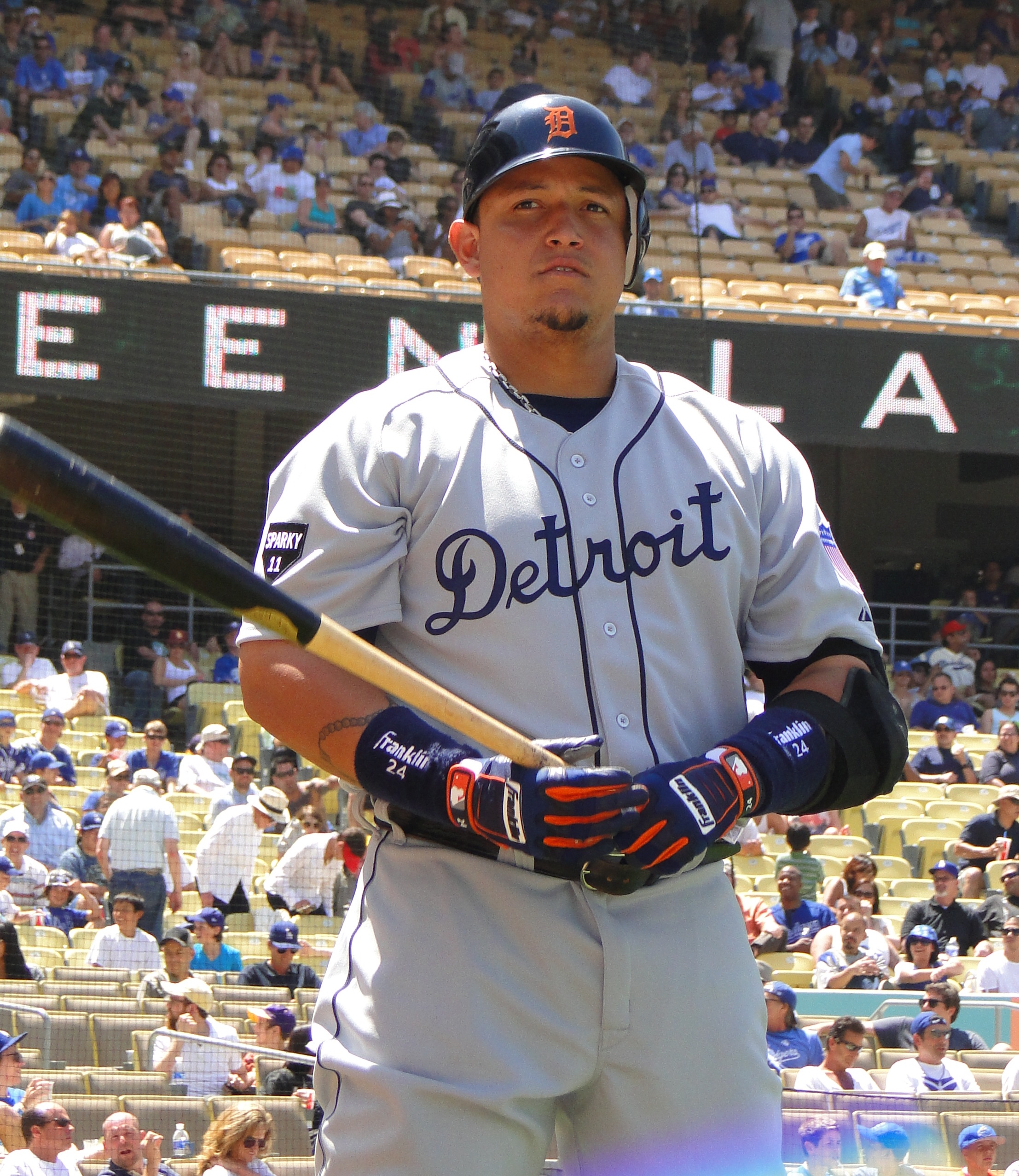
This article covers the 120-year history of the Detroit Tigers baseball team. It begins with their formation in 1894 and transition to the American League in 1901. The article highlights key periods including their early years with Ty Cobb, championship teams of 1935, 1945, 1968, and 1984, and recent successful years from 2006-2014. It mentions important players throughout their history including Ty Cobb, Hank Greenberg, Al Kaline, and Miguel Cabrera. The article also notes their move from Tiger Stadium to Comerica Park in 2000 and concludes with the team's ongoing efforts to build another championship team while maintaining their important place in Detroit's culture.